
Advanced Monitoring Strategies
You can't fix what you can't hear. This course will show you the secrets to setting up a monitoring system that focuses on revealing the highest level of details.

Improved mixes and masters
Learn a simple technique that can be applied to most studio monitors that will instantly improve their accuracy and lead to better mixes, and improved translation.. the very same day you take this course, you'll be able to get an instant improvement, and you'll hear details in your mixes that previously were lost.
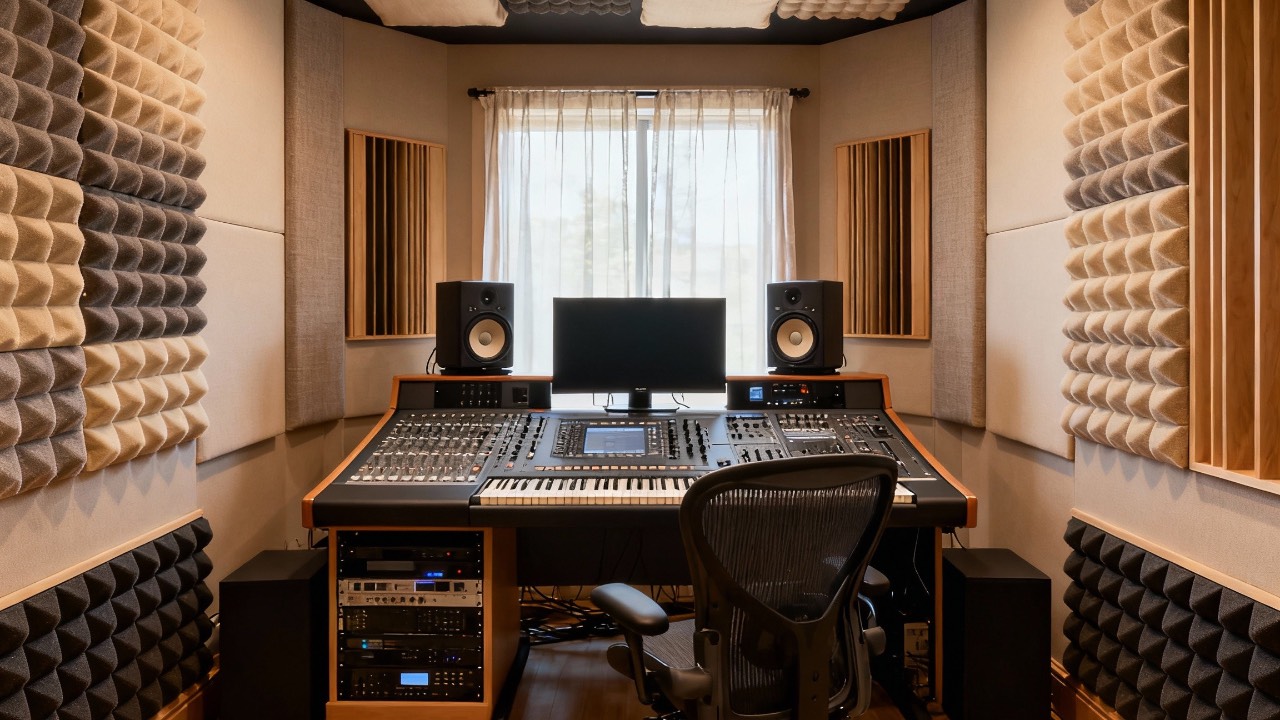
Don't buy the wrong monitors
Your monitors are literally the single most important piece of gear in your studio. There's no point in having a high quality microphone, (or preamp, or anything else) if your monitors don't reveal the tiny nuances of that microphone, and you won't be able to be able to bring them forward in a mix if you can't hear them.
The Magnifying Glass effect
Learn how to make lemonaid out of lemons by harnessing the imperfections of your monitors to your advantage.
Almost every decision you make in the recording process, from choosing the right microphone, microphone placement, which plugins to use and how to adjust them, are based on what you hear from your monitors. Improving your monitoring isn't about just buying more expensive monitors, there are things you can do even at a low budget.
Your Instructor
Kris
Advanced Monitoring Strategies
Take the assumptions and guesswork out of your monitoring strategy.
Get it NowYou don't want the best sounding studio monitors... you want the ones that reveal the most imperfections.
A lot of people think a good way to choose studio monitors is to go to the music store and audition them, and choose the best sounding ones.
Here's the problem with that... for mixing and mastering, you don't want the speakers that sound the best... you want the ones that reveal the most imperfections.
There's a big difference between these 2 things, and most manufacturers prioritize sounding good over revealing impoerfections, because that's what most people think they should buy.
The goal of a studio monitor, from the manufacturers perspective, is to be as profitable of a product as possible. Most people who buy studio monitors from the music store are listening for which one sounds the best for the price, rather than which one reveals the most imperfections. Also, listening to commercial music is a terrible way of finding which speakers reveal the most imperfections, because you probably won't hear any at all. This has led manufacturers to focus their efforts on making monitors that sound good, rather than reveal imperfections.
When auditioning speakers, you should listen to mixes that aren't perfectly polished. Some speakers add compression, which will hide poor compression settings. Some speakers add harmonics, which make everything sound bigger and fuller than it really is, and that will mask other fine details in the mix, and trick you into thinking your mix sounds better than it really does. In this course, you'll learn what causes this and avoid it.
All speakers have imperfections, but the goal of a studio monitor is to have as little imperfections as possible. This is different than the goals of a home theatre speaker system, where it's about making the imperfections sound good by adding compression, harmonics, and exagerated bass and treble.
Our Promise
In this course, you will learn how to improve the effectiveness of your monitoring vastly more than what you would otherwise get for the amount of money you paid for this course. If you are not 100% satisfied that we delivered on this promise, we offer a full 7 day money back guarantee.